





Krishnamurthi Paddhati (KP)
KP Astrology, also known as Krishnamurti Paddhati, is a sophisticated system of astrology that refines the principles of Vedic Astrology.
Krishnamurthi Paddhati (KP)
What is KP Astrology?
KP Astrology, also known as Krishnamurti Paddhati, is a sophisticated system of astrology that refines the principles of Vedic Astrology. It emphasizes the stellar system of prediction and the concept of "Sub Lords." This system uses the Bhava Chalit Chart with a unique approach, considering the first house from the Lagna degree up to the next 30 degrees. The 360-degree Zodiac Belt is divided into 12 unequal parts, measured from cusp to cusp, where the cusp is the intersection point of two houses. KP Astrology involves calculating the first seven Bhavas and then determining the remaining Bhavas by deducting the corresponding house degrees from 180 degrees. Each Zodiac sign contains 2 and 1/4th Nakshatras, further divided into 9 parts, each assigned to specific planets based on the Placidus system of Western Astrology. For instance, in the Aries Zodiac, Ashwini, Bharani, and Krittika Nakshatras are divided into 9 parts, with the first part assigned to Ketu, followed by Venus, Sun, and so on, based on their respective Dasha periods.
The concept of Sub Lords is central to KP Astrology, providing detailed and accurate predictions by dividing each planet's influence into sub-periods. Known for its practical applications, KP Astrology is widely used for making precise predictions in various aspects of life, including career, relationships, health, and finance. This system enhances the accuracy of predictions, offers clear insights, and is versatile enough to be applied to different areas of life, making it a valuable tool for astrologers. One of the unique aspects of KP Astrology is its emphasis on the timing of events. By analyzing the Sub Lords and their interactions, astrologers can predict the timing of significant life events with remarkable precision. This makes KP Astrology particularly useful for answering specific questions about when certain events are likely to occur.

Additionally, KP Astrology incorporates the use of the Placidus house system, which divides the ecliptic into unequal segments based on the observer's latitude. This method provides a more personalized and accurate chart, reflecting the individual's unique circumstances and environment. The system also emphasizes the importance of the ruling planets of the Nakshatras (lunar mansions) and their sub-divisions, known as Sub Lords. Each Nakshatra is divided into nine unequal parts, and each part is ruled by a planet. The position of these Sub Lords in the birth chart provides detailed insights into various aspects of an individual's life.
KP Astrology's approach to predictive astrology is both systematic and logical, making it accessible to those who prefer a more structured method of analysis. Its focus on precision and detail allows astrologers to provide clear and actionable guidance to their clients. The system's ability to offer specific and accurate predictions makes it a preferred choice for those seeking clarity in their life's path. Whether it's about career advancements, relationship dynamics, health concerns, or financial decisions, KP Astrology provides a reliable framework for making informed choices.
KP Astrology, or Krishnamurti Paddhati Astrology, is a distinctive system developed by Sri K.S. Krishnamurti. Unlike traditional Vedic astrology, KP Astrology utilizes the Placidus house division system, which divides zodiac signs into unequal subdivisions for more precise event timing and predictions. This system also employs the KP Ayanamsa to calculate planetary positions relative to fixed stars. A notable feature is the use of sub-lords, specific points within a sign that indicate the nature and outcome of events. These elements enable astrologers to make accurate predictions about various life aspects, such as career, relationships, and health. KP Astrology emphasizes empirical observation, logical reasoning, and precise calculations, offering detailed insights into the timing and nature of life events. This modernized form of Vedic astrology is valued for its systematic and detailed approach, providing a reliable framework for understanding and predicting life's complexities. Additionally, KP Astrology's focus on empirical methods and logical analysis sets it apart, making it a preferred choice for those seeking a more scientific approach to astrology.
Furthermore, KP Astrology incorporates the concept of ruling planets, which are determined based on the time of birth and the position of the Moon. These ruling planets play a crucial role in determining the timing of events and the overall life path of an individual. The system also emphasizes the importance of the Nakshatras, or lunar mansions, which are used to fine-tune predictions and provide deeper insights into an individual's personality and destiny.
Another significant aspect of KP Astrology is its approach to rectifying birth charts. By using the ruling planets and sub-lords, astrologers can accurately determine the correct time of birth, even if the recorded time is slightly off. This precision allows for more accurate predictions and a better understanding of an individual's life events.
KP Astrology also places a strong emphasis on the practical application of astrological principles. Astrologers are encouraged to test their predictions against real-life events and continuously refine their techniques. This empirical approach ensures that KP Astrology remains a dynamic and evolving system, capable of providing relevant and accurate insights in a rapidly changing world.
Astropill provides a free and authentic online Kundli software that delivers accurate and detailed predictions about various aspects of life, including career, love life, marriage, and business. Expert astrologers prepare the Kundli, which can be used for match-making, Kundli matching for marriage, and future predictions. The software tracks the movement of all planets in the native's life from birth up to 100 years, noting every specific planetary period that influences activities on Earth. Astropill's Kundli program is comparable to traditional Hindu astrology Kundli, offering predictions similar to Hindu or Vedic astrology. It provides a genuine Kundli or Janma Kundli, identical to a traditional birth chart, and is available in multiple languages, including Hindi, English, Bengali, Kannada, Malayalam, Marathi, and Gujarati. The Janam Kundli app encompasses all essential astrological features, making it a reliable Kundli finder tool that allows users to create and save their Kundli online with just a click.
Available on both Android and iOS devices, the app is renowned for its accuracy and precision in creating Kundli. In addition to these features, Astropill's Kundli software offers several advanced functionalities. Users can generate detailed birth charts, analyze planetary positions, and receive personalized predictions based on their birth details. The software also includes tools for horoscope matching, determining Kundli dosha, and suggesting remedies. It provides comprehensive reports on planetary transits, retrogression, and combustion, as well as detailed analysis of Tithi, Vaar, Karan, Nakshatra, and Yog. With its user-friendly interface and extensive customization options, Astropill's Kundli software is a valuable resource for both professional astrologers and enthusiasts seeking accurate astrological insights.
Vedic astrology in several ways
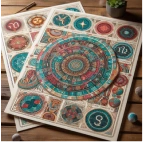
Sub-divisional Charts
Sub-divisional charts, also known as Varga charts, are an essential tool in Vedic astrology. These charts provide a more detailed and nuanced understanding of various aspects of an individual's life by dividing the main birth chart (Rashi chart) into smaller segments. Each sub-divisional chart focuses on a specific area of life, such as career, relationships, health, or spiritual growth, offering deeper insights that are not always apparent in the main birth chart.
One of the most commonly used sub-divisional charts is the Navamsa chart (D-9), which is crucial for understanding marriage and partnerships. The Navamsa chart divides each zodiac sign into nine equal parts, providing a detailed view of an individual's marital prospects and relationship dynamics. Similarly, the Dashamsa chart (D-10) is used to analyze career and professional success by dividing each sign into ten parts
Another important sub-divisional chart is the Shodashamsa chart (D-16), which focuses on vehicles and conveyances. This chart helps astrologers predict the acquisition and condition of vehicles in a person's life. The Saptamsa chart (D-7) is used to understand progeny and children, offering insights into fertility, childbirth, and the relationship with one's offspring
The use of sub-divisional charts allows astrologers to pinpoint specific events and periods in a person's life with greater accuracy. For example, the Chaturthamsa chart (D-4) provides insights into property and domestic life, while the Dwadashamsa chart (D-12) focuses on parental influences and heritage
By analyzing these sub-divisional charts alongside the main birth chart, astrologers can offer more precise and comprehensive predictions. This method enhances the overall accuracy of astrological readings, making it possible to address specific questions and concerns with greater confidence.

Prediction Technique
Astrology offers a variety of prediction techniques that help astrologers forecast future events and understand past occurrences. These techniques provide insights into different aspects of life, such as career, relationships, health, and personal growth. One key method is transits, which track the current positions of planets relative to an individual's natal chart, indicating significant life events and changes. Secondary progressions advance the natal chart by one day for each year of life, revealing the unfolding of an individual's personality and life path over time. Solar arc directions move all planets and points in the natal chart forward by the same degree for each year, identifying major life changes and turning points. Solar and lunar returns create charts for the exact moments the Sun and Moon return to their natal positions, offering insights into yearly and monthly themes. Horary astrology answers specific questions by casting a chart for the exact time the question is asked, providing precise guidance. The Vimsottari Dasa system, used in Vedic astrology, divides life into planetary periods based on the Moon's position at birth, with each planet influencing different life aspects during its reign. Harmonics involve dividing the zodiac into equal parts to create charts that reveal hidden patterns and potentials
Additionally, annual profections is a technique that assigns each year of a person's life to a specific house in the natal chart, highlighting the themes and areas of focus for that year. Firdaria, another ancient method, divides life into periods ruled by different planets, each bringing its own influence and challenges. Primary directions involve moving the planets and angles of the natal chart forward in time, providing insights into long-term trends and significant life events. Lunar phases and eclipses are also crucial, as they can trigger important developments and shifts in an individual's life, especially when they align with key points in the natal chart.
Together, these techniques offer a comprehensive understanding of an individual's life journey, helping astrologers provide detailed and accurate forecasts for navigating life's complexities. By combining these methods, astrologers can offer a holistic view of a person's potential and challenges, guiding them towards making informed decisions and understanding the timing of significant events. This multi-faceted approach ensures that astrology remains a valuable tool for personal growth and self-awareness.

Cusps
In astrology, a cusp is the imaginary line that separates two consecutive zodiac signs or houses in a horoscope. When someone is born on or near the transition between two signs, they are said to be "born on the cusp." This means their birth date falls at the end of one sign and the beginning of another, creating a unique blend of characteristics from both signs. Cusps occur during the final days of one zodiac sign and the initial days of the next. For example, the Aries-Taurus cusp occurs between April 17 and April 21, blending the dynamic and assertive nature of Aries with the practical and determined qualities of Taurus. Similarly, the Gemini-Cancer cusp, from June 19 to June 23, combines Gemini's communicative and adaptable traits with Cancer's nurturing and emotional tendencies.
Being born on the cusp doesn't mean a person has two sun signs, but rather that they may exhibit traits from both signs. This can result in a more complex and multifaceted personality. For instance, someone born on the Leo-Virgo cusp (August 19 to August 25) might possess Leo's confidence and charisma along with Virgo's analytical and meticulous nature. Cusps can also influence compatibility and relationships. Individuals born on the cusp may find they relate to a wider range of people, as they embody qualities from two different signs. This can make them more adaptable and versatile in their interactions
Cusps also play a role in house divisions within a natal chart. The cusp of a house marks the beginning of that house and can influence the interpretation of planets located near the boundary. For example, if a planet is positioned close to the cusp of the 7th house (which governs partnerships and relationships), it may have a significant impact on how relationships are experienced and understood.
Overall, cusps add an extra layer of depth to astrological interpretations, offering a richer understanding of an individual's personality and life path. They highlight the fluidity and interconnectedness of the zodiac, reminding us that astrological signs are not rigid categories but part of a continuous spectrum of energies and influences. This nuanced approach allows for a more personalized and comprehensive astrological reading, helping individuals gain deeper insights into their unique blend of traits and potentials.

House Division
In astrology, house division refers to the method of dividing the birth chart into twelve distinct sections, known as houses, each representing different areas of life such as career, relationships, and personal growth. Various house systems exist, each offering a unique approach to this division. The Placidus system, one of the most popular, divides houses based on the time it takes for the Ascendant to reach the Midheaven, reflecting the unequal division of time in Earth's rotation. The Equal House system, by contrast, assigns exactly 30 degrees to each house, providing a straightforward and consistent division. The Whole Sign system, one of the oldest methods, starts each house at 0 degrees of a sign, regardless of the Ascendant's degree, valued for its simplicity and historical significance. The Koch system, similar to Placidus, offers precise timing of events with slight variations in calculation. The Porphyry system divides the space between the Ascendant and Midheaven into three equal parts, while the Campanus system uses the prime vertical to create houses that reflect the spatial orientation of the sky. Each system influences the interpretation of a natal chart differently, allowing astrologers to choose based on personal preference, the needs of a reading, or traditional practices. Understanding these systems provides a nuanced and flexible approach to astrology, enabling more accurate and personalized insights.
Additionally, the Regiomontanus system divides the celestial sphere into twelve equal parts using the equator, which can be particularly useful for horary astrology, where precise timing is crucial. The Meridian system (also known as the Axial Rotation system) divides the chart based on the meridian, offering another perspective on house division that emphasizes the importance of the Earth's rotation. The Topocentric system is a modern approach that adjusts the house cusps based on the observer's location, providing a highly personalized chart that reflects the individual's specific place on Earth.
Each house system has its strengths and applications, and astrologers may choose different systems depending on the type of reading they are conducting. For example, the Whole Sign system is often favored for its simplicity and clarity in traditional astrology, while the Placidus system is widely used in psychological astrology for its detailed and dynamic approach. The choice of house system can significantly impact the interpretation of a chart, highlighting different aspects of a person's life and providing varied insights
By exploring and understanding the various house systems, astrologers can tailor their readings to better suit the needs of their clients, offering more precise and meaningful guidance. This flexibility in approach underscores the richness and depth of astrological practice, allowing for a more comprehensive and personalized understanding of an individual's life and potential.

Timing Events
In astrology, timing events is a crucial aspect that allows astrologers to predict significant moments in an individual's life. This process involves various techniques that analyze the movement and interaction of celestial bodies with the natal chart. One primary method is transits, where astrologers track the current positions of planets and their aspects to the natal planets, indicating periods of change, growth, or challenge. Another important technique is secondary progressions, which advance the natal chart by one day for each year of life, revealing the gradual unfolding of an individual's personality and life path. Solar arc directions involve moving all planets and points in the natal chart forward by the same degree for each year, helping to identify major life changes and turning points. Solar and lunar returns are also used to time events, with solar return charts offering a snapshot of the themes and events for the coming year, and lunar return charts providing insights into shorter-term influences. Horary astrology answers specific questions by casting a chart for the exact time the question is asked, providing precise guidance. The Vimsottari Dasa system, commonly used in Vedic astrology, divides life into planetary periods based on the Moon's position at birth, with each planet influencing different aspects of life during its reign. Additionally, electional astrology focuses on selecting the most auspicious times to undertake significant actions, enhancing the likelihood of success and positive outcomes
Another technique is annual profections, which assigns each year of a person's life to a specific house in the natal chart, highlighting the themes and areas of focus for that year. Firdaria, an ancient method, divides life into periods ruled by different planets, each bringing its own influence and challenges. Primary directions involve moving the planets and angles of the natal chart forward in time, providing insights into long-term trends and significant life events. Lunar phases and eclipses are also crucial, as they can trigger important developments and shifts in an individual's life, especially when they align with key points in the natal chart.
These techniques, when combined, offer a comprehensive approach to timing events in astrology, allowing astrologers to provide detailed and accurate forecasts that help individuals navigate their lives with greater clarity and confidence. By understanding the timing of personal growth, career advancements, or relationship milestones, these methods provide valuable insights into the unfolding of life's journey. This multi-faceted approach ensures that astrology remains a valuable tool for personal growth and self-awareness, guiding individuals through the complexities of life with informed and timely advice.

Horary Astrology
Horary astrology is a specialized branch of astrology that focuses on answering specific questions by casting a chart for the exact moment the question is asked. Unlike natal astrology, which analyzes a person's birth chart, horary astrology provides insights based on the current positions of celestial bodies at the time the question is posed
The process begins when the querent (the person asking the question) formulates a clear and precise question. The astrologer then casts a chart for the exact time and place the question is understood. This chart, known as the horary chart, is interpreted to provide answers and guidance. The positions of the planets, the aspects they form, and the houses they occupy are all crucial in determining the outcome.
One of the key principles in horary astrology is the importance of the Ascendant and its ruler. The Ascendant represents the querent, and its ruling planet provides significant clues about the situation. The Moon's position and aspects are also vital, as the Moon often signifies the flow of events and the emotional state of the querent.
Each house in the horary chart represents different areas of life and is assigned based on the nature of the question. For example, questions about relationships are associated with the 7th house, while questions about career are linked to the 10th house. The condition and placement of the ruling planets of these houses offer insights into the matter at hand.
Horary astrology also considers specific rules and guidelines, such as the "strictures against judgment," which help determine the validity of the chart. For instance, if the Ascendant is in the early degrees (0-3) or late degrees (27-30) of a sign, it may indicate that the question is either premature or too late to be judged accurately.
This ancient practice provides a unique and powerful tool for gaining clarity on pressing issues, offering detailed and timely answers that can guide decision-making. Whether it's finding a lost item, understanding relationship dynamics, or making career choices, horary astrology offers precise and insightful answers based on the cosmic snapshot of the moment the question is asked.
Additionally, horary astrology often employs significators, which are specific planets that represent the key elements of the question. For example, in a question about a job, the 10th house and its ruler would be the significators for the career, while the 1st house and its ruler represent the querent. The interaction between these significators, such as aspects and placements, provides detailed information about the outcome.
Horary astrologers also pay close attention to reception, which refers to the relationship between planets based on the signs they occupy. Positive reception can indicate cooperation and favorable outcomes, while negative reception might suggest obstacles or challenges. Timing is another critical aspect, with the Moon's movement through the signs and its aspects often used to predict when events will occur.
The use of fixed stars and Arabic parts can add further depth to horary readings. Fixed stars, which are specific stars with known influences, can provide additional context and detail. Arabic parts, calculated points based on specific formulas, can highlight hidden factors or underlying themes in the question
Horary astrology's precision and focus make it an invaluable tool for addressing specific concerns and providing clear, actionable insights. Its ability to offer immediate answers based on the current cosmic conditions sets it apart from other astrological practices, making it a powerful resource for those seeking guidance on pressing issues.

Simplification
Simplification in astrology involves distilling complex astrological concepts into more understandable and accessible forms without losing their essence. This approach is particularly useful for beginners or those who find traditional astrological methods overwhelming. By focusing on the core principles and essential elements, simplification helps make astrology more approachable and practical.
One way to simplify astrology is by concentrating on the most influential factors in a chart, such as the Sun, Moon, and Ascendant. These three components provide a foundational understanding of an individual's personality and life path. The Sun represents the core self and ego, the Moon reflects emotions and inner needs, and the Ascendant indicates how a person presents themselves to the world. By starting with these key elements, one can gain significant insights without getting bogged down by the complexities of the entire chart.
Another method of simplification is using the Whole Sign house system, where each house begins at 0 degrees of a sign. This system is straightforward and eliminates the need for complex calculations involved in other house systems. It allows astrologers to focus on the meanings of the houses and their planetary rulers without the added layer of intricate house cusps.
Astrologers can also simplify their practice by prioritizing major aspects, such as conjunctions, oppositions, squares, trines, and sextiles. These aspects are the most impactful and provide clear insights into the relationships between planets. By focusing on these major aspects, one can avoid the confusion that might arise from considering minor aspects, which can be more subtle and less influential.
Additionally, using planetary transits as a primary predictive tool can streamline the process of forecasting events. Transits involve tracking the current positions of planets and their interactions with the natal chart. This method is relatively simple and provides immediate insights into upcoming opportunities and challenges.
Simplification in astrology also involves clear and concise communication. Astrologers should aim to explain their findings in a way that is easy to understand, avoiding jargon and overly technical language. This approach ensures that clients or students can grasp the essential messages and apply them to their lives effectively.
Overall, simplification in astrology makes the practice more accessible and user-friendly, allowing more people to benefit from its insights. By focusing on the most significant elements and presenting them in a clear and understandable manner, astrologers can help individuals navigate their lives with greater clarity and confidence.
Krishna Murti Padhdhati has gained popularity among astrologers for its practical approach and the emphasis on accurate timing of events. It continues to be studied and practiced by astrologers worldwide who seek a more streamlined and precise method of predictive astrology.
Frequently Asked Questions
KP uses ruling planets (RP) and sub-lords of cusps, along with Vimshottari Dasha and transits, for timing events.
Yes, KP can predict career success by analyzing the 10th house and its significators and sub-lords.
Marriage is predicted by analyzing the 7th house, its significators, and the Dasha periods of relevant planets.
Yes, financial predictions are made by analyzing the 2nd and 11th houses and their significators.
Nakshatras in KP astrology are divided into sub-lords, which help provide detailed predictions.
Some critics find KP complex or divergent from traditional Vedic principles, but many practitioners vouch for its accuracy.
KP is an astrological system developed by Prof. K.S. Krishnamurti, focusing on precise predictions using the Placidus house system and sub-lords.
KP uses the Vimshottari Dasha system to time events by analyzing the sub-lords of the planets in the Dasha periods.